Concrete Floor Polishing Pads for Every Stage of the Sequence
We stock the complete polishing sequence — from 100-grit transitional resin pads through 3000-grit final-gloss finishers. Hybrid diamond edge pads, floor polishing pads, dip pads, backer pads, and maintenance tools for planetary grinders. Brands include ULTRA, Secco, Emperor/DIP, and Diamabrush in 3", 5", and 7" diameters. In-stock orders placed before 2 PM ship same day M–F via FedEx or UPS. Call (802) 489-0828 to spec your exact sequence before you order — we'll confirm grit, bond, and diameter based on your machine and floor condition.
The Complete Polishing Sequence — Stage by Stage
Stage 1 — Transition from Metal Bond (100–200 Grit Resin)
After your metal bond grinding passes, start here to remove metal scratches and begin true polishing. A 100-grit resin pad bridges the gap between metal and resin bond without gouging. Move to 200-grit if the floor is accepting polish consistently. Don't rush this step — scratches left at this stage compound through every pass that follows.
Stage 2 — Hone (400 Grit)
The 400-grit pad refines the scratch pattern, cuts into the surface to prep for gloss development, and begins showing early clarity. This is where the floor starts to look like it's going somewhere. If clarity is inconsistent across the slab, repeat 200 before proceeding. Do not skip 400 to chase speed — you will see it in the final finish.
Stage 3 — Pre-Polish (800 Grit)
800-grit opens up the gloss. At this stage you're starting to see real reflection. The surface should be semi-gloss with a consistent sheen before moving forward. Apply densifier (lithium or sodium silicate) before this pass or after — your spec may vary. Uneven sheen at 800 means go back to 400.
Stage 4 — Final Gloss (1500–3000 Grit)
1500-grit delivers commercial gloss. 1800-grit is the standard for most retail and commercial floors. 3000-grit produces a high-gloss show-floor finish. Most commercial jobs finish at 1500 or 1800. Showrooms, car dealerships, and high-end retail go to 3000. Apply guard/protector after final pass per your spec.
Every floor is different. PSI, aggregate exposure, prior coating history, and machine weight all affect which grits to skip or repeat. Call us before you commit to a sequence — we've spec'd thousands of floors.
Pad Types in This Collection
-
Hybrid Edge Pads
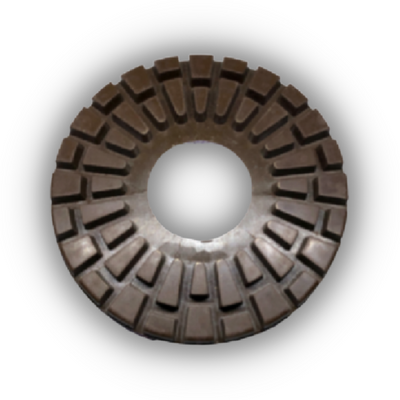
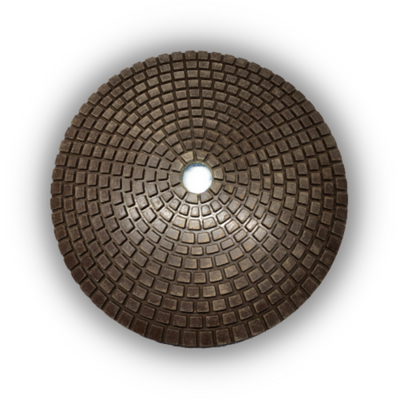
ULTRA 5" and 7" hybrid diamond pads for edge and detail work on planetary machines. Diamond-impregnated resin bond delivers consistent scratch removal and smooth transition from metal bond. Available from 100 grit through 3000 grit. Works on all major planetary grinder satellite heads. Call with your machine model to confirm attachment size before ordering a full sequence.
-
Floor Polishing Pads
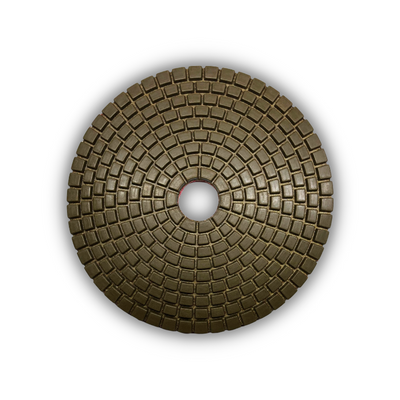
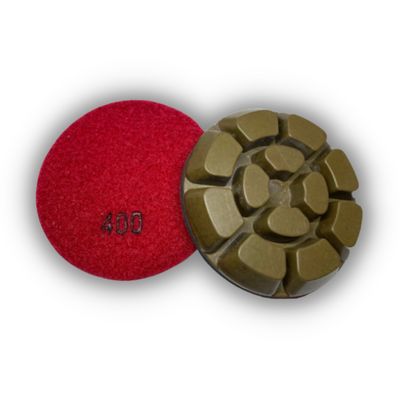
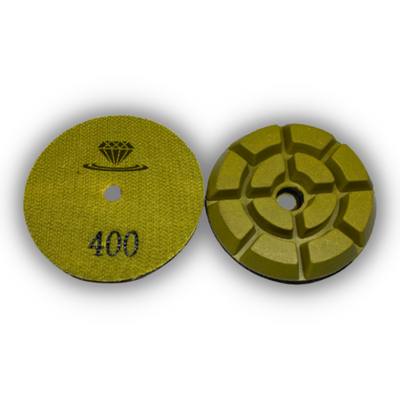
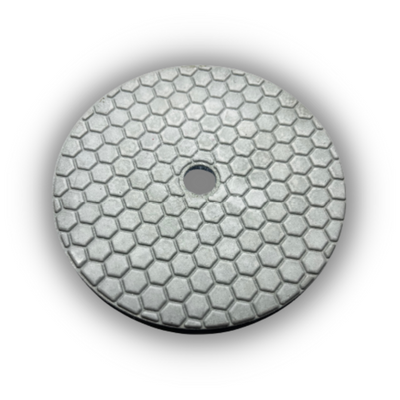
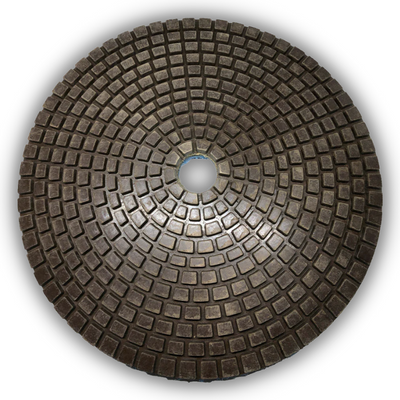
Secco, Emperor/DIP, and resin-bond floor pads for the main polishing sequence. Available in 3" and 5" for planetary grinder satellites. Compatible with Klindex, Lavina, Husqvarna, Superabrasive, STI, HTC, Diamatic, and Onyx machines. Full grit range: 100 through 3000. Ask about sequence pricing when ordering multiple grits for a single job — we discount full sets.
-
Specialty & Maintenance Pads
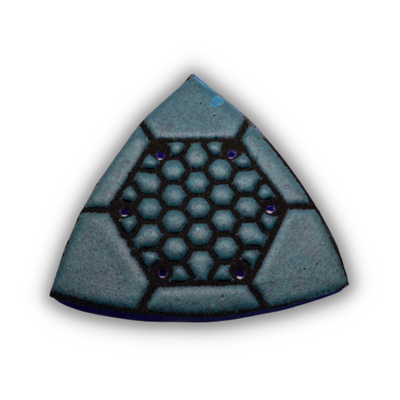
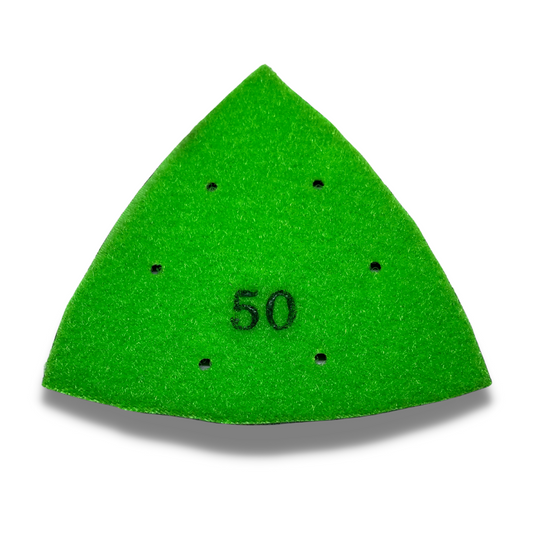
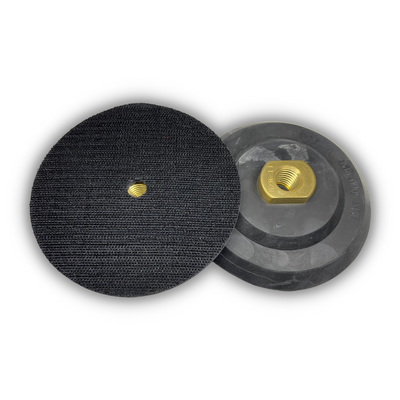
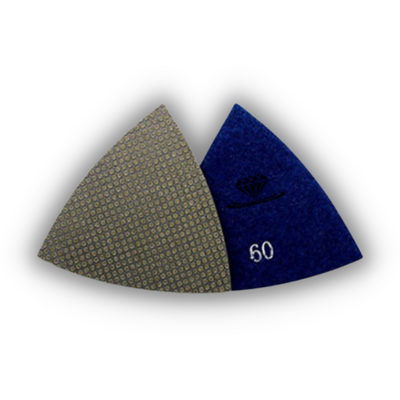
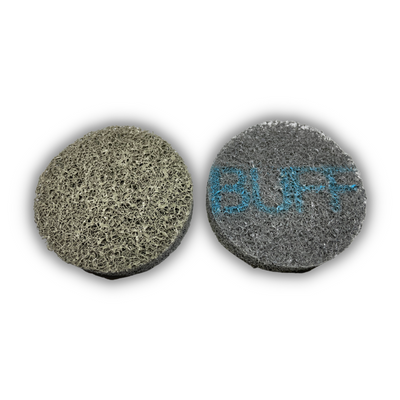
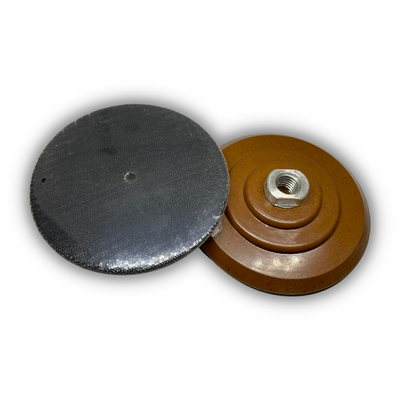
Rubber and rigid backer pads for attaching resin pads to planetary satellites. DIP-style deep-impregnation polishing pads for hard, dense concrete. Multi Tool triangle pads for corners and wall-to-wall coverage. Diamabrush concrete polishing tools for detail and residential work. Burnishing pads for routine gloss restoration on existing polished floors between jobs.
Compatible with Every Major Planetary Grinder
Klindex · Lavina · Husqvarna · Superabrasive · STI Prep/Master · HTC · Diamatic · Onyx · and more
Pad compatibility depends on satellite attachment size. Most common: 3" and 5" Velcro (hook-and-loop). Some machines use rigid backer systems or proprietary attachment methods. Before ordering a full sequence, confirm your satellite attachment style and diameter — call or email us your machine model and we'll tell you exactly what fits and which backer pads (if any) you need. A worn or deformed backer causes uneven pad wear and inconsistent scratch patterns — we stock replacements.
-
ULTRA 5inch (125mm) Hybrid Edge Concrete Polishing Pad
Regular price $36.00 USDRegular priceUnit price per$60.00 USDSale price $36.00 USDSale -
Con-Crete Polishing Pad
Regular price From $13.15 USDRegular priceUnit price per$22.22 USDSale price From $13.15 USDSale -
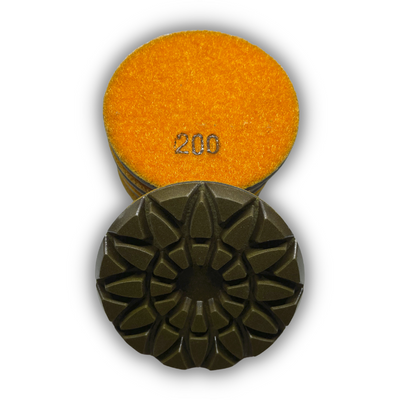
3" (75mm) Lustor: Top-Quality Concrete Polishing Pad
Regular price $14.04 USDRegular priceUnit price per$21.60 USDSale price $14.04 USDSale -
Multi Tool Triangle Pad's For Concrete & Natural Stone Corners
Regular price $20.88 USDRegular priceUnit price per -
3" (76mm) Phantom Concrete & Natural Stone Polishing Pad
Regular price $20.28 USDRegular priceUnit price per$31.20 USDSale price $20.28 USDSale -
3" (75mm) Buffalo Concrete & Natural Stone Polishing Pad
Regular price $23.89 USDRegular priceUnit price per -
ULTRA 6inch (150mm) Hybrid Edge Pad
Regular price $60.00 USDRegular priceUnit price per -
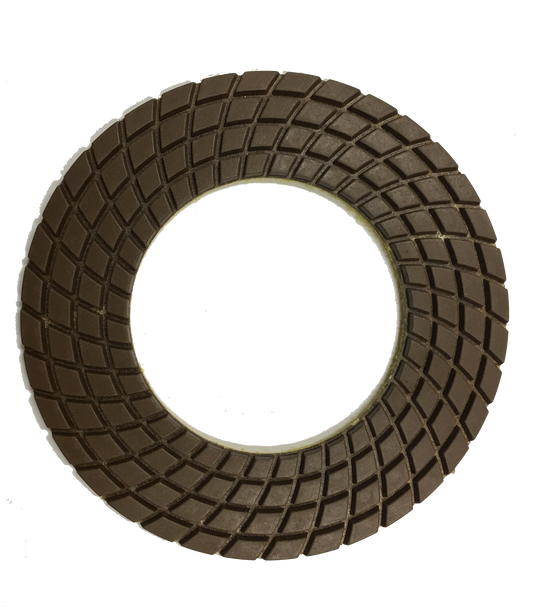
Emperor/DIP Diamond Impregnated Concrete & Natural Stone Buffing Pad
Regular price From $74.80 USDRegular priceUnit price per -
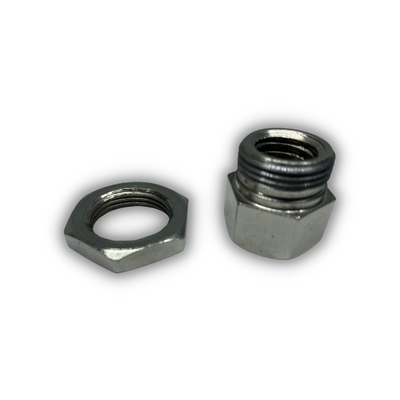
Cupwheel Aluminum Flange 5/8-11 Adaptor
Regular price $10.00 USDRegular priceUnit price per -
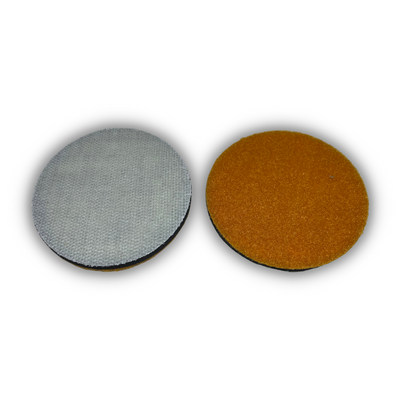
3" (75mm) Foam Riser Pads
Regular price $4.08 USDRegular priceUnit price per$6.28 USDSale price $4.08 USDSale -
Rubber Backer Pad 5 inch (125mm) 5/8-11
Regular price $14.22 USDRegular priceUnit price per -
Multi Tool Triangle Electroplated Pad's For Concrete & Natural Stone Corners
Regular price $12.00 USDRegular priceUnit price per$24.00 USDSale price $12.00 USDSale -
3" (75mm) Emperor/DIP Diamond Impregnated Concrete & Natural Stone Buffing Pad
Regular price $12.45 USDRegular priceUnit price per -
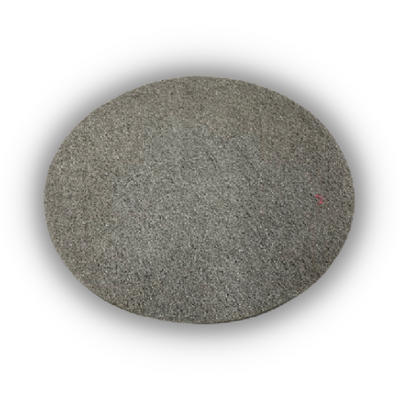
Secco 5inch (125mm) Concrete & Natural Stone Polishing Pad
Regular price $22.50 USDRegular priceUnit price per -
Rigid Backer Pad 5 inch (125mm) High-Quality Plastic 5/8-11
Regular price $23.71 USDRegular priceUnit price per -
ULTRA 7inch (175mm) Hybrid Edge Pad
Regular price $70.00 USDRegular priceUnit price per
Choosing Pads by Floor Hardness
-
Soft Concrete (Under 3,000 PSI)
Older slabs, lightweight concrete, and porous floors. Use harder bond pads — the diamonds need more resistance to expose and cut properly. Start at 100–200 grit and move through the sequence carefully. Aggressive passes on soft concrete cause uneven scratching that's hard to recover from at higher grits. Take your time at 400.
-
Medium Concrete (3,000–5,000 PSI)
Most commercial slabs fall here. Medium-bond resin pads work well across the full sequence. Standard 100→400→800→1500 progression. This is the most predictable range — pads cut consistently and the floor responds well to densifier. If you're unsure of your slab's hardness, assume medium and start conservative.
-
Hard Concrete (5,000+ PSI)
High-PSI industrial slabs, warehouse floors, and power-troweled finishes. Use softer bond pads — the diamonds need to release faster to keep cutting. Consider a 50-grit transition pass before moving to 100-grit resin. Hard floors take longer to develop gloss but finish beautifully and hold up for years. Don't skip densifier — it matters most here.
From Contractors in the Field
-
★★★★★
"Ordered the full ULTRA edge pad sequence — 100 through 1500. Had them on the Klindex by Thursday morning. Cut clean, held up through multiple passes on a hard warehouse slab. The 400-grit is the best I've run on medium-PSI concrete."
— Brian K., Concrete Polishing Contractor, Nashville TN
-
★★★★★
"Called before ordering because I had a non-standard satellite setup on my Lavina. They figured out the right backer size in two minutes and shipped same day. Floor came out perfect. Won't order pads anywhere else — these guys actually know the equipment."
— Carlos M., Surface Prep Specialist, Phoenix AZ
-
★★★★★
"I've tried three other suppliers for DIP pads. These outlast them all — 30–40% more square footage per pad on the hard industrial slabs I work. Consistent cut through the full sequence. Price is right and they ship fast. Done looking."
— Dave R., Industrial Floor Contractor, Cleveland OH
Polishing Pad Questions from Contractors
What's the difference between hybrid pads and standard resin polishing pads?
Hybrid pads (like the ULTRA series) combine diamond-impregnated resin with a flexible backing — designed for edge work and transition passes where the pad needs to conform to slightly uneven surfaces. Standard resin-bond floor pads (Secco, Emperor/DIP) are harder and designed for planetary satellite use on open floor areas where you need maximum cutting efficiency and grit consistency across the full pad face. For a complete job, you typically need both: hybrids for edges and transitions, standard pads for open floor area.
How many pads do I need for a typical polishing job?
A standard 4-grit sequence (100, 400, 800, 1500) on a 5,000 sq ft floor typically uses 2–4 pads per grit stage depending on floor hardness and machine weight. Harder floors wear pads faster. Plan for 8–16 pads total for a first-time job at that square footage. For repeat floors with known conditions, you can often get by with fewer. Call us with your square footage, floor PSI estimate, and machine model — we'll help you plan before you order.
Can I use these pads wet or dry?
Most resin-bond polishing pads (100–3000 grit) are designed for dry use on concrete. Running them wet can cause premature delamination from the backer and reduces cutting efficiency. Some specialty pads (certain DIP-style pads) can be used with a light mist for heat control on very hard concrete. Check individual product specs or call us — we'll tell you exactly what's approved for the specific pads you're ordering.
When do I apply densifier in the polishing sequence?
Most contractors apply densifier (sodium silicate or lithium silicate) after the 400-grit pass, letting it penetrate and react overnight before continuing with 800 and above. Some apply it after 200 grit on very porous floors. The key: the surface must be clean and free of grease or contamination before densifier — anything on the surface prevents proper penetration. We stock densifiers and chemicals in our chemicals collection. Call for a product recommendation matched to your floor type and spec.
Do you stock backer pads and satellite accessories?
Yes. We stock rubber backer pads and rigid backers for attaching resin pads to planetary satellites in common sizes (3" and 5" Velcro). If your satellites have a non-standard attachment system, call us — we may need to source the right backer for your specific machine. Backer condition matters: a worn or deformed backer causes uneven pad wear and inconsistent scratch patterns across the floor.
What's the right pad for removing light coatings before polishing?
If there's a residual sealer or light coating, start with a hard-bond metal diamond at 16–30 grit rather than a resin pad — resin pads are not designed for coating removal and will glaze quickly. Once the coating is gone and the concrete is exposed, transition to 100-grit resin to begin polishing. For heavy epoxy or thick coatings, you need PCD (polycrystalline diamond) scrapers first — see our diamond tooling collection. Call us if you're unsure what's on the floor and we'll help you figure out the right starting point.
Not Sure Where to Start? We'll Spec the Sequence for You.
Tell us your machine model, floor hardness (or just describe the job — warehouse, new construction, retail buildout), and your target finish level. We'll walk you through the full sequence: which grits, which pads, how many, in what order, and where densifier fits in. No charge, no obligation — just real answers from people who've done this work. US Abrasives, Minneapolis MN. Call (802) 489-0828 or email info@fast-prep.com.